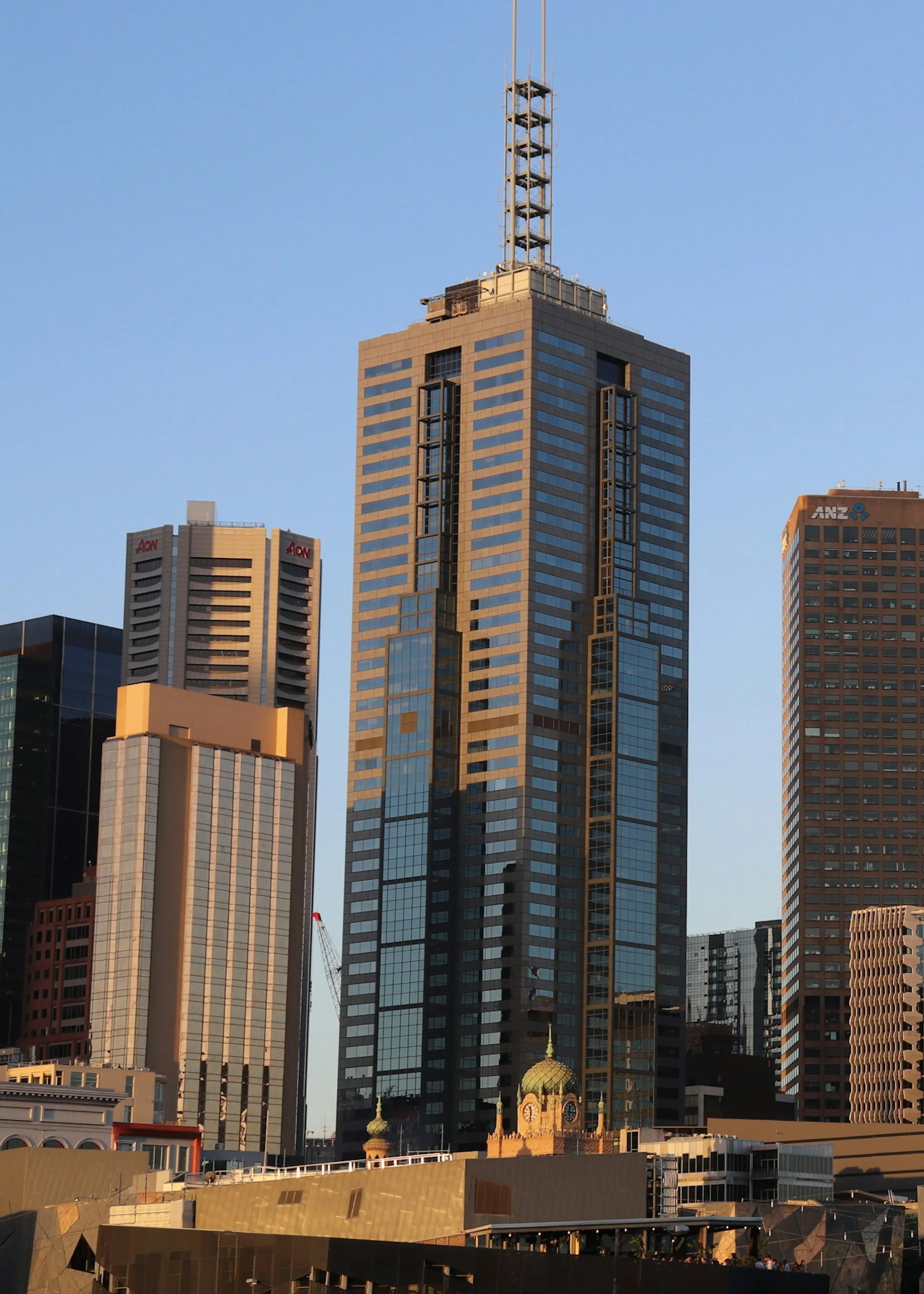
Combustible Cladding
Combustible cladding — assessed, reported, rectified.
Non-compliant cladding is the most consequential problem a building's facade can carry. Summit assesses it, documents it defensibly, and rectifies it — assessment and the works under one accountable team.
The issue
What makes cladding combustible.
Some aluminium composite panels (ACP) and expanded polystyrene (EPS) systems have a core that burns and carries fire rapidly up a building's facade. The combustibility comes from the panel's core material, not its surface finish — two panels can look identical from the street and behave entirely differently in a fire. After the 2014 Lacrosse fire in Melbourne's Docklands and the 2017 Grenfell Tower fire in London, these systems were identified as a serious life-safety risk on many mid- and high-rise buildings across Victoria.
How to identify combustible claddingRegulatory timeline
How Victoria got here.
- 2014
Lacrosse fire, Docklands
An apartment fire at the Lacrosse building in Docklands spread rapidly up combustible ACP cladding, exposing a systemic issue in Australian construction.
- 2017
Grenfell Tower fire, London
The Grenfell tragedy made the international scale of the combustible cladding problem unambiguous and accelerated regulatory response across multiple jurisdictions.
- 2018–19
Victorian cladding audit
The Victorian Cladding Taskforce audit identified hundreds of buildings with non-compliant combustible cladding, focused on residential mid- and high-rise stock.
- 2019–23
Cladding Safety Victoria
CSV was established to administer a state-funded rectification programme, prioritised by risk tier. The programme covered a subset of identified buildings; many others were left to private rectification from the outset.
- 2023
Transition to the Building and Plumbing Commission
CSV's funded programme closed to new applicants. Its regulatory functions transferred to the Building and Plumbing Commission. Enforcement powers remain; funding does not.
Cladding types
The three systems behind Victoria's combustible cladding problem.
-
ACP with polyethylene core (ACP-PE)
The most common non-compliant system. Two thin aluminium sheets bonded to a polyethylene core — and polyethylene burns. Widely specified between 2000 and 2015 for its weight, cost and stability. Non-compliant under current NCC provisions and the system at the centre of most rectification works.
-
ACP with fire-retardant core (ACP-FR)
Same construction with a mineral-filled, fire-retardant core. May be compliant depending on building height, separation distances and the specific certified product. The same panel can be compliant on one building and non-compliant on another. Visually indistinguishable from ACP-PE without documentation.
-
Expanded polystyrene (EPS) systems
Render applied over expanded polystyrene insulation. The polystyrene itself is highly flammable; the render skin provides partial protection but does not eliminate the risk. Common on lower-rise residential and on heritage buildings retrofitted for thermal performance.
Who is responsible
The duty sits with the building's owner.
External walls — including the cladding system — are the responsibility of the building owner or, for strata-titled buildings, the owners corporation. The obligation does not transfer with sale, expire with time, or waive because a funded programme closed. Two distinct decision frameworks apply, depending on building type.
-
Owners corporations
Strata-titled buildings: external walls are common property under the Owners Corporations Act 2006. The OC committee proposes, owners vote, a special levy typically funds the works.
Read more -
Building owners and facilities managers
Single-owner residential, commercial and mixed-use buildings: the duty sits with the building owner directly. A facilities manager acts as agent. Different decision mechanism, same regulatory backbone.
Read more
Post-CSV
The funded programme is closed. The obligation is not.
Victoria's government-funded rectification programme, run by Cladding Safety Victoria, closed to new applicants in 2023; its functions folded into the Building and Plumbing Commission. The funded programme never covered every building, and its closure does not remove the underlying duty under the Building Act and the National Construction Code. Identifying and rectifying non-compliant cladding remains the responsibility of building owners and owners corporations — now, in most cases, privately funded and on their own timeline.
Read the post-CSV obligation explainerHow Summit helps
Assessment to rectification, under one team.
Assessment
Accredited facade inspection identifies cladding type, extent and risk.
Defect report
Defensible, photo-referenced report for insurers, engineers and the OC committee.
Rectification
Builder-grade replacement of non-compliant cladding, with a registered practitioner accountable.
Questions
Combustible cladding, answered.
Get your cladding assessed.
Tell us the building — we will scope an assessment and give you a clear picture of where it stands, with a defect report your committee or risk register can act on.
Request an assessment